
Selflow app
What is Selflow?
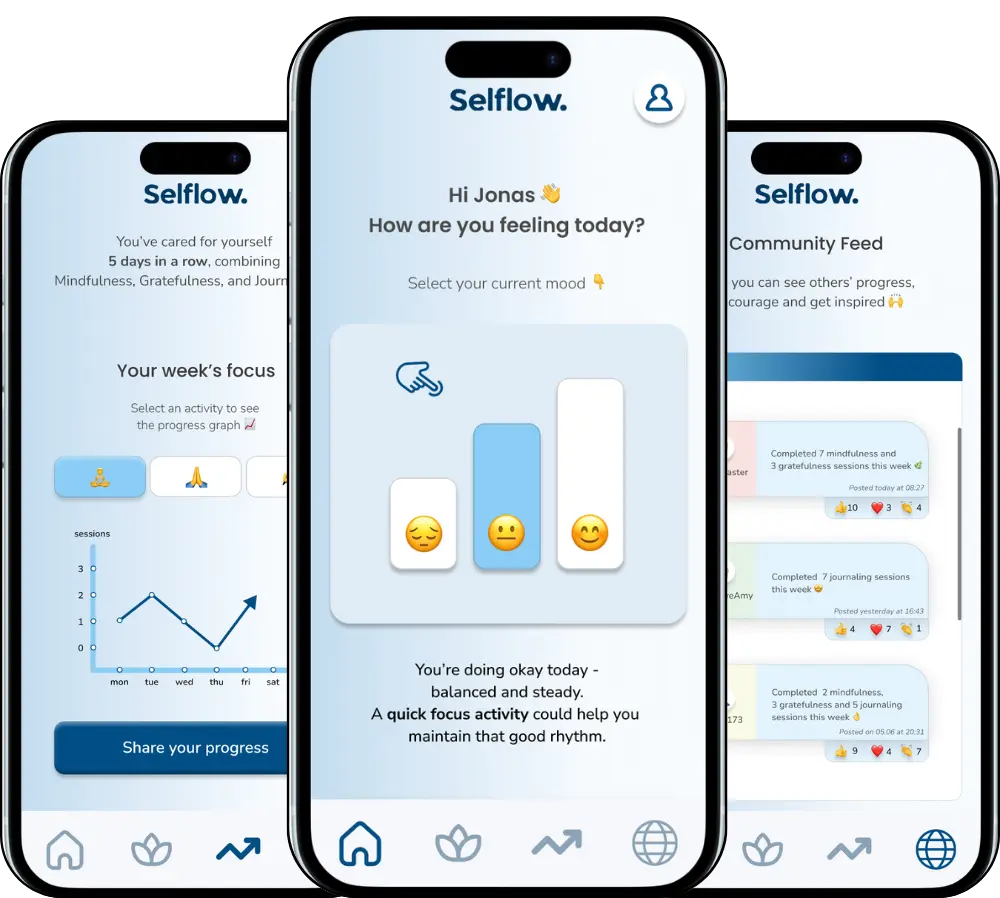
Selflow is a well-being app designed to help people slow down, reflect, and care for their mental health in a gentle and structured way. The app combines mindfulness, journaling, and gratitude practices into a calm daily routine that adapts to each user’s mood and progress. Its purpose is to make self-care feel natural and rewarding rather than forced or time-consuming.
#DesignThinking #UserResearch #UsabilityTesting #Prototyping
Why I created Selflow?
I created Selflow out of a personal interest in how thoughtful design can improve mental well-being and everyday balance. Many wellness apps focus on motivation but often lack personalization and calm user flow. My goal was to design an experience that feels supportive, emotionally aware, and easy to stay consistent with — reflecting the principles of mindfulness through both function and design.
How I created Selflow?
The project was developed through a complete UX process, starting with user interviews and affinity mapping to uncover pain points and needs. I then moved through ideation, low-fidelity wireframes, and usability testing to validate the flow before building the high-fidelity prototype in Figma. The final design focuses on clarity, emotional connection, and visual calmness, creating a guided experience that encourages users to take care of themselves one mindful step at a time.

Why I created Selflow?
I created Selflow out of a personal interest in how thoughtful design can improve mental well-being and everyday balance. Many wellness apps focus on motivation but often lack personalization and calm user flow. My goal was to design an experience that feels supportive, emotionally aware, and easy to stay consistent with — reflecting the principles of mindfulness through both function and design.
How I created Selflow?
The project was developed through a complete UX process, starting with user interviews and affinity mapping to uncover pain points and needs. I then moved through ideation, low-fidelity wireframes, and usability testing to validate the flow before building the high-fidelity prototype in Figma. The final design focuses on clarity, emotional connection, and visual calmness — creating a guided experience that encourages users to take care of themselves one mindful step at a time.